Walking past a crawl space door and catching a damp smell is a common issue for homeowners. Here in Austell, GA, the heavy red clay soil and humid summers mean that water beneath a house does not just evaporate and go away. When dealing with standing water down there, hiring the right crew or planning the fix requires careful attention. Homeowners often make the same exact mistakes over and over again, leading to wasted cash and recurring moisture problems.
Here is what you need to watch out for during your water removal project.
Treating the Symptom Instead of the Source
The biggest mistake people make is pumping out standing water and calling it a day. If you do not figure out why the water is pooling in your crawl space, you will be right back where you started after the next heavy spring storm rolls through our area. Water usually pools because of negative exterior grading, broken downspouts, or hydrostatic pressure pushing moisture straight through the ground. Rapid Restoration Co. always tells homeowners that Water Damage Restoration is only half the battle. You have to intercept the water before it enters, whether that means installing proper French drains, fixing surface grading around your foundation, or putting in a reliable sump pump system.
Falling for Quick-Fix Estimates Over the Phone
No legitimate contractor can give you an accurate price for crawl space water removal without actually crawling down into the dirt. If a company throws out a flat-rate price over the phone without looking at your specific layout, run the other way. Every home in neighborhoods across Austell has unique quirks, from tight clearance heights to varying degrees of mud and sub-floor saturation. A trustworthy pro will put on protective suits, crawl the space, check the sill plates, and measure the moisture levels before writing up an estimate.
- Ignoring the grade of your yard outside the foundation walls
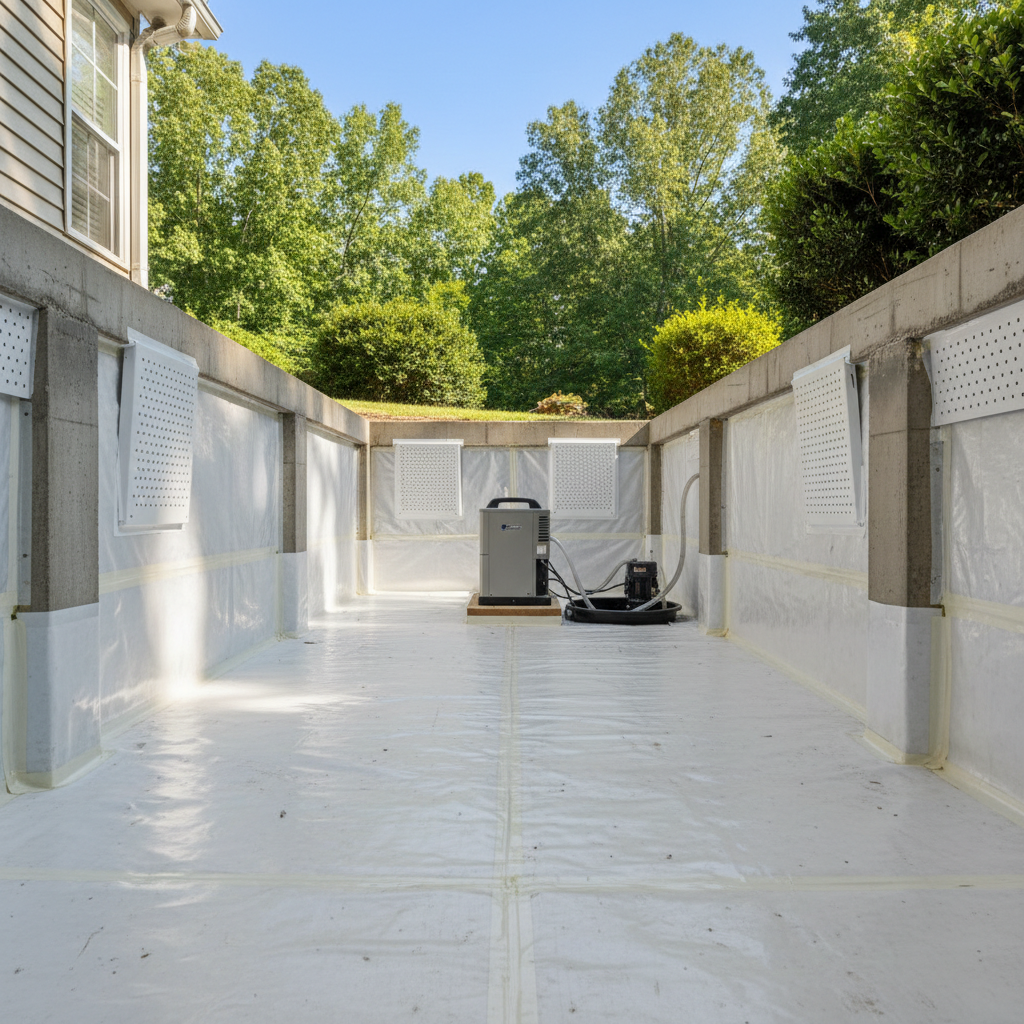
- Failing to seal off crawl space vents properly after drying
- Choosing thin plastic sheeting instead of a heavy vapor barrier
Ignoring the Clay Soil Reality
Local red clay in Austell does not drain well at all. When it gets saturated, it holds onto moisture and exerts massive pressure against foundation walls. Contractors from outside the region sometimes use generic drainage solutions that simply do not hold up to Georgia soil mechanics. If your Water Damage Restoration plan does not account for how dense soil behaves during heavy rainfall, you are setting yourself up for future foundation shifting and recurring puddles.
Skipping the Dehumidification Step
Once the standing water is gone and the mud is sucked out, people often think the job is finished. But local climate conditions mean that ambient humidity sits at very high levels for months on end. If you leave raw, damp air trapped under your house, mold will start colonizing your floor joists within days. A proper Water Damage Restoration project always transitions into long-term humidity control with a commercial-grade, sealed system. Take your time, vet your contractors thoroughly, and make sure the job gets done right the first time around.